





HubSpot for B2B companies
A CRM platform designed around the way your company works
HubSpot brings customer data and tools for marketing, sales and customer service into one platform. The technology is only one part of the project: successful adoption also depends on processes, data quality, roles, permissions and integrations.
Ekeria is a software company and certified HubSpot partner. We help B2B companies evaluate, implement and adopt HubSpot with a practical focus on the work users need to perform every day.
The starting point may be a new CRM adoption, an integration project or the improvement of an existing HubSpot portal. In each case, the configuration should support clear business processes rather than reproduce fragmented habits.
Ekeria services
From CRM design to adoption
We support companies through implementation, configuration, integrations, training and ongoing optimisation. The work starts from business requirements and translates them into a HubSpot setup that teams can actually use.
For new adoption projects, we define the operating model before automation. For existing portals, we focus on the specific gaps that prevent users, data and processes from working together.
Implementation
Configure HubSpot around your processes, data, roles and reporting requirements, from initial design to launch.
Consulting
Review priorities, governance and the operating model needed to use HubSpot effectively across teams.
Training
Give users and administrators the practical skills they need to adopt the configured platform.
Integrations
Connect HubSpot with relevant business systems so that data can move through controlled, documented flows.
Free CRM
The platform offers you tools for all your team members that are 100% free.
Marketing Hub
Native tools for Marketing of HubSpot Marketing Hub.
Sales Hub
All the tools you need for your sales department.
Service Hub
Follow all your customer's activities, thanks to an easy-to-use and customizable information database.
CMS Hub
Create your website, optimize your landing pages and your articles with the tools provided by CMS hub.
Operations Hub
Integrate all the tools you already use and avoid losing useful information and opportunities.
Business context
The #1 platform for inbound marketing
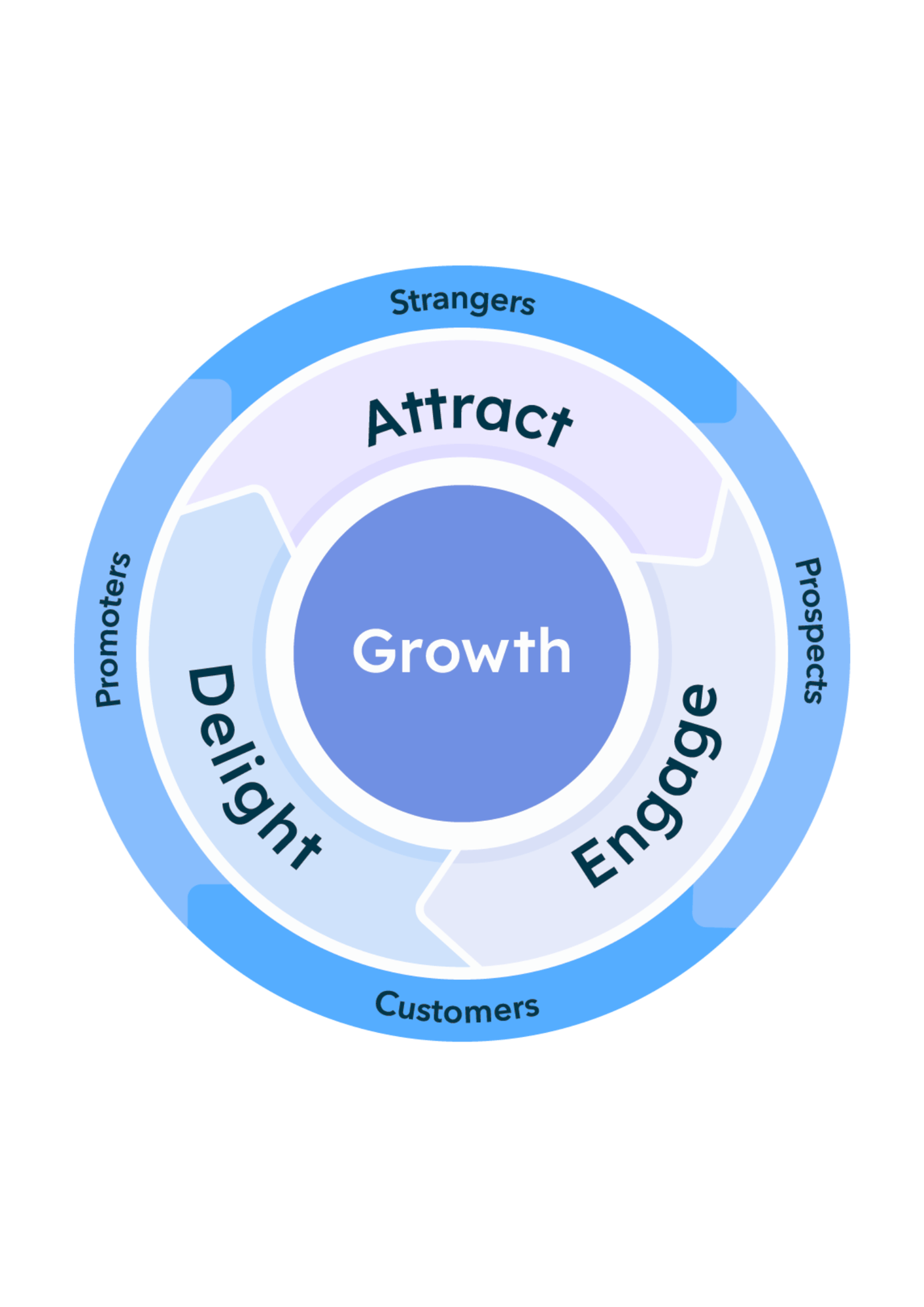
This versatile platform allows you to better manage each stage of the inbound marketing methodology. Let's look at them:
- Attract. Start by attracting the attention of your target audience through high-quality, relevant content. This can include blog posts, videos, guides, and more. The more in-depth and useful the content, the more users-potential customers-will be interested in it.
- Involve. The next step is the engagement phase. This focuses on converting visitors into leads. It does this by offering them premium content, discounts and offers in exchange for their contact information.
- Delight. Once you have acquired leads, the delighting phase aims to provide them with an exceptional experience. This must exceed their expectations. This allows you to establish lasting relationships. You can reward your customers with dedicated news, recurrences, exclusive content, and anything else that may be of interest to them and represents added value.
- Loyalty. Finally, the loyalty phase aims to maintain and further develop the relationship with existing customers. It does this by offering ongoing support, useful resources, and additional opportunities for engagement.
This model emphasizes the importance of providing added value to target audiences and building authentic and lasting relationships with customers. In addition, this fosters spontaneous word of mouth among customers who are satisfied with the products, services, and relationship built.
For everyone
HubSpot for small and large companies
CRM stands out as a versatile solution that can be adapted to the needs of both small businesses and large companies, in both the B2B and B2C sectors.
For small businesses, it offers a complete package of marketing, sales and customer service tools. It provides an efficient and effective way to manage all stages of the customer lifecycle. With features such as.
- contact management,
- marketing automation,
- content creation,
small businesses can create targeted marketing campaigns that generate tangible results. All without the need for a large team or considerable financial resources.
For large companies, the software offers tailored solutions that can be scaled up. In this way they meet the complex needs of large organizations. With advanced features of:
- contact management,
- ersonalization of user experiences,
- detailed reporting,
enables large companies to create sophisticated marketing and sales strategies that fit their specific processes and goals.
Whether a small business looking to grow rapidly or an established company looking to maintain its leadership position in the market, software provides the solutions and resources needed to consolidate success in an increasingly competitive market environment.
Platform choice
Choose the HubSpot products that support the required processes
HubSpot combines CRM data with products for marketing, sales, service, content, data and commerce. A project does not need every product by default: the scope should follow the processes, users and information the company needs to manage.
Licensing, configuration and integrations should therefore be evaluated together, with a clear distinction between what HubSpot manages and what remains in other business systems.
Marketing Hub
Marketing Hub supports lead generation and nurturing through forms, email, segmentation, automation and campaign analysis. Its value depends on data quality, consent management and a clear handover between marketing and sales.
Sales Hub
Sales Hub helps teams manage companies, contacts, opportunities and sales activities. Pipelines, properties, automation and reporting should reflect the company’s actual commercial process and ownership rules.
Service Hub
Service Hub supports customer service processes through tickets, shared communication tools, knowledge resources and reporting. The configuration should clarify channels, responsibilities, service stages and the information agents need.
Content Hub
Content Hub provides tools for managing websites, landing pages, blogs and other digital content in connection with CRM data. Governance, templates and publishing responsibilities remain part of the implementation design.
Data Hub
Data Hub is the integrated solution for optimising business processes. Through data integration tools, workflow automation and data cleansing, it enables companies to centralise and standardise their operations.
With advanced analysis and reporting capabilities, it provides detailed insights for informed decision-making. Thanks to its flexibility and customisation, Data Hub adapts business operations to the specific needs of each company, promoting efficiency and growth. Using Data Hub, companies can optimise their operations, reduce costs and maximise value for their customers.

Commerce Hub
Commerce Hub brings selected quote, payment and revenue tools into the CRM environment. Availability and suitability depend on the company’s market, payment model, accounting processes and HubSpot plan.
CRM integrations
Connect HubSpot with the systems that matter
HubSpot often needs to exchange data with ERP, ecommerce, product, service or custom business applications. Ekeria designs integrations around the ownership, timing and use of each data set.
The aim is not to copy everything into the CRM. It is to give users reliable information where they need it, while reducing duplicate entry and uncontrolled data flows.
Mobile operations
Access relevant CRM information on the move
The HubSpot mobile app gives authorised users access to selected CRM information and activities from supported mobile devices. The useful functions depend on the products, permissions and configuration adopted by the company.
Mobile access should support defined work processes, with the same attention to data quality and user responsibilities as the desktop environment.
Frequently asked questions about HubSpot projects
What should a HubSpot implementation project define?
The project should define business processes, data, users, permissions, pipelines, reporting and any required integrations. The exact scope depends on the products adopted and on the systems already used by the company.
Can HubSpot integrate with our business systems?
HubSpot provides APIs, native connections and integration options. Feasibility and design depend on the systems involved, the available interfaces, data ownership and the required frequency of exchange.
How long does HubSpot implementation take?
There is no reliable standard duration. Timing depends on scope, data migration, integrations, configuration, testing, training and the availability of the client team. Ekeria defines the plan after reviewing these elements.
Can an existing HubSpot portal be improved?
Yes. An assessment can identify gaps in data, processes, permissions, automation, reporting and adoption. Improvements should be prioritised according to business impact and technical dependencies.
How do you support user adoption?
Adoption combines clear processes, a usable configuration, role-based training and practical support after launch. Training is based on the workflows users will actually perform.
How are HubSpot licensing costs evaluated?
Licensing depends on the HubSpot products, editions, seats and features required. Current prices and commercial terms should be verified on the official HubSpot website or in a project-specific proposal.
HubSpot resources
Guides and articles on CRM and HubSpot
Explore the Ekeria HubSpot and CRM resources for practical articles on adoption, sales processes, data, integrations and platform use.
Discuss your CRM project
Request a HubSpot demo tailored to your business
Tell us which processes you want to manage, who will use the CRM and which systems need to be connected.
Ekeria will prepare a discussion focused on the most relevant configuration, data and integration requirements. Request your HubSpot demo.